5/1/2026 9:00:00 AM
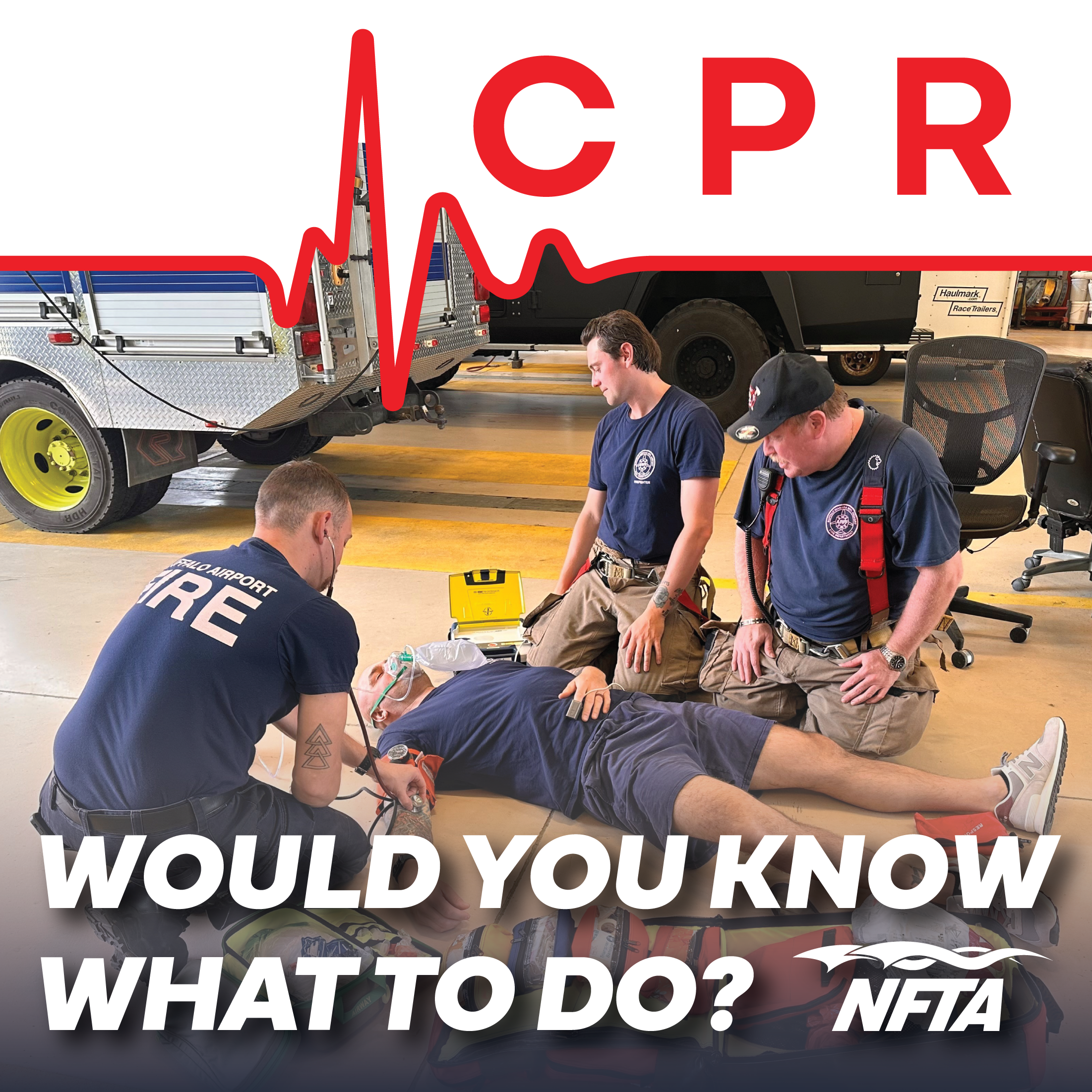
Recently, the NFTA has encountered cardiac-related incidents at the Buffalo Airport. Thanks to the critical efforts of ARFF and TAPD staff, community members, and the availability of public Automated External Defibrillators (AEDs), the outcomes have been positive. This serves as a reminder of the importance of public access to AEDs and the impact that community members who take CPR classes can have in saving lives.
Information from the American Heart Association:
More than 350,000 cardiac arrests occur outside of the hospital each year. In 2020, any-mentioned sudden cardiac arrest mortality in the US was 436,852. CPR, especially if administered immediately after cardiac arrest, can double or triple a person’s chance of survival. According to 2021 US data for adult OHCA only, survival to hospital discharge was 9.1% for all EMS-treated non-traumatic OHCA cardiac arrests.
Bystander CPR improves survival.
Out-of-Hospital Cardiac Arrests (OHCA) most often occur in homes/residences (73.4%), followed by public settings (16.3%) and nursing homes (10.3%). If performed immediately, CPR can double or triple the chance of survival from an out-of-hospital cardiac arrest.
The 6 links in the Chain of Survival are:
- Recognition of cardiac arrest and activation of the emergency response system
- Early cardiopulmonary resuscitation (CPR) with an emphasis on chest compressions
- Rapid defibrillation
- Advanced resuscitation by Emergency Medical Services and other healthcare providers
- Post-cardiac arrest care
- Recovery (including additional treatment, observation, rehabilitation, and psychological support)
A strong Chain of Survival can improve chances of survival and recovery for victims of cardiac arrest.